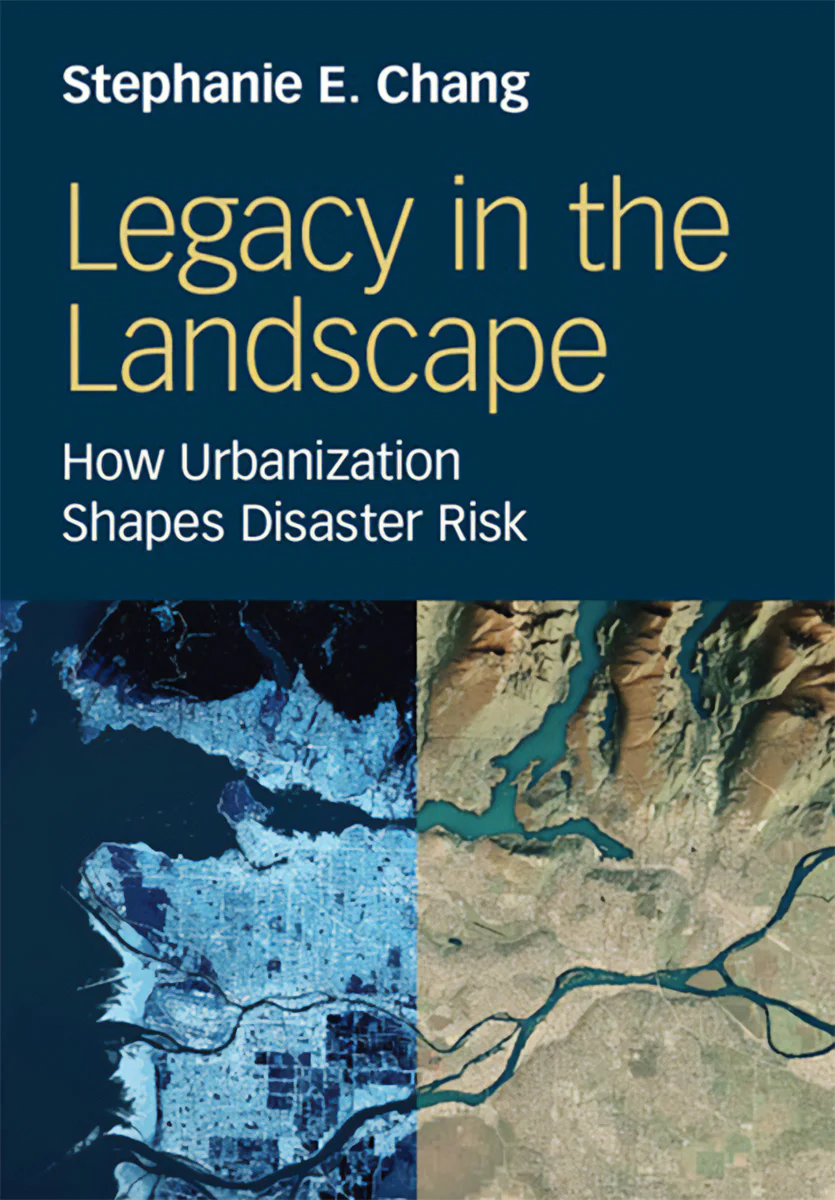
Legacy in the Landscape: How Urbanization Shapes Disaster Risk
With its focus on the city rather than the disaster event, this book situates natural disasters in the context of urban growth and change. It offers an original, interdisciplinary perspective by connecting the technical and socioeconomic dimensions of disaster risk and highlighting the commonalities of hazards such as river flooding, coastal flooding, and earthquakes.
The book begins by proposing a novel Urban Risk Dynamics framework that emphasizes the roles of economy, landscape, and technology in influencing hazard, exposure, and vulnerability. This framework is then used to support the examination of six contrasting cities from around the world, offering generalized insights that apply to a wide range of urban risk contexts.
The book will be of significant interest to students and researchers working in urban planning, civil engineering, Earth sciences, and environmental science, and to policy makers and practitioners concerned with reducing future disaster risk in cities.
- Uses non-technical language to explain key concepts from fields such as urban economics, geomorphology, and earthquake engineering, making it an accessible resource for readers from different disciplinary backgrounds
- Introduces an original Urban Risk Dynamics framework that highlights urbanization's role in influencing hazard risk and lays the foundation for a new approach to disaster mitigation
- Draws upon rich case study analysis of six contrasting cities from across the world, developing generalized insights that are relevant across all regions and hazard types
Product Information
Product Information
Shipping & Returns
Shipping & Returns
Description
With its focus on the city rather than the disaster event, this book situates natural disasters in the context of urban growth and change. It offers an original, interdisciplinary perspective by connecting the technical and socioeconomic dimensions of disaster risk and highlighting the commonalities of hazards such as river flooding, coastal flooding, and earthquakes.
The book begins by proposing a novel Urban Risk Dynamics framework that emphasizes the roles of economy, landscape, and technology in influencing hazard, exposure, and vulnerability. This framework is then used to support the examination of six contrasting cities from around the world, offering generalized insights that apply to a wide range of urban risk contexts.
The book will be of significant interest to students and researchers working in urban planning, civil engineering, Earth sciences, and environmental science, and to policy makers and practitioners concerned with reducing future disaster risk in cities.
- Uses non-technical language to explain key concepts from fields such as urban economics, geomorphology, and earthquake engineering, making it an accessible resource for readers from different disciplinary backgrounds
- Introduces an original Urban Risk Dynamics framework that highlights urbanization's role in influencing hazard risk and lays the foundation for a new approach to disaster mitigation
- Draws upon rich case study analysis of six contrasting cities from across the world, developing generalized insights that are relevant across all regions and hazard types